
"US coffee exports"
3000 article(s) found

Point72, a well-known hedge fund, bought 5.1% of Luckin Coffee for US $390 million.
Professional coffee knowledge exchange more coffee bean information please follow the coffee workshop (Wechat official account cafe_style) well-known hedge fund Point72 spent 390 million US dollars to list Luckin Coffee, well-known hedge fund Point72 disclosed to the US Securities Regulatory Commission that it increased its stake in Luckin Coffee by about 17.02 million shares, accounting for 5.1 per cent. The capital market then gave positive feedback, Luckin Coffee (LK.US)
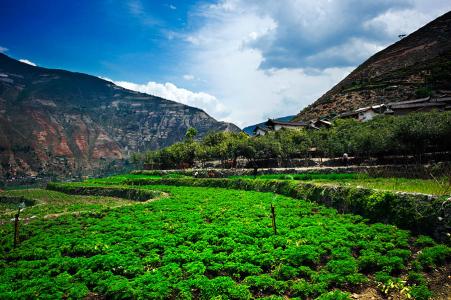
The total output value of coffee in Yunnan is expected to reach 35 billion yuan in 2020-the Yunnan provincial party committee and provincial government have always attached importance to it.
At present, coffee planting areas in the province are distributed in more than 40 counties (urban areas) in 10 cities. The main producing areas are Baoshan, Dehong, Pu'er and Lincang in southern and southwestern Yunnan. The acreage and output of the four cities account for more than 85% of the province. Coffee is also an important agricultural product for earning foreign exchange. In 2014, coffee exported 48429 tons and earned foreign exchange of 145.91 million US dollars, slightly more than the previous year.

Brazil: the world's largest producer of coffee beans
Coffee cafezinho is Brazil's favorite small cup of strong black coffee. In Brazil, buying you a cup of coffee is a habit and an important etiquette for hospitality, just like Chinese tea. Brazil is the world's largest coffee producer, known as the coffee kingdom. It is said that coffee was first discovered by an old shepherd in the Kafa region of Ethiopia.

Introduction to the characteristics of Yemeni Coffee Flavor Manor and the planting Environment of Fine Coffee in Yemen
There are many varieties of Yemeni coffee, most of which are named after their origin and type, with different flavors, such as fresh wood, tobacco, musk, fruit wine, roasted nuts, cocoa and warm seasonings, especially Moha coffee. At present, Yemeni Moha coffee is the most famous Yemeni Moha coffee on the market, such as Isemary, Matari, Sanani and so on. Sanani coffee has medium grain size and fruit wine style.

An excellent balance of Ecuadorian Los Congo Manor coffee flavor taste characteristics of the region
From July 1927, Augusto. Cesar Sandinista led a guerrilla war against the American occupation, forcing the withdrawal of American troops in 1933. February 21, 1934 Nicaragua National Guard Commander Anastasio. Somoza. Garcia assassinated Sandino at the behest of President Roosevelt. He took office in 1936 and has since established a pro-American relationship for more than 40 years.

New York Futures: Robusta Coffee fell to a five-and-a-half-year low as Vietnamese exports were strong
London (Reuters)-Robusta coffee futures fell to a five-and-a-half-year low on Monday as strong exports from Vietnam, the world's second-largest coffee producer, added to already abundant supply pressure. London cocoa and sugar futures closed flat with light trading as the US market was closed for holidays. Traders said that Vietnam had just had a bumper harvest and that coffee from the previous crop season was still in stock.

Yemeni coffee features Yemeni coffee flavor
Coffee has been a traditional export product of Yemen for hundreds of years, and it is still one of the most important cash crops and export products of Yemen. Statistics show that among the top 30 exports of Yemen in 2000, cooked coffee beans, raw coffee beans and coffee shells ranked second, eighth and 21st respectively, with a total value of about $17.5 million, of which raw coffee was about $12.25 million.

Peru's coffee production will continue to decline in 2014
The Peruvian National Coffee Council recently announced that Peru's coffee production will continue to decline in 2014 due to the yellow rust disaster, which is expected to reach only 4.8 million piculs (46 kilograms per picul), down about 8 percent from 5.2 million piculs this year.
Peruvian coffee production may fall by 8%
The Peruvian National Coffee Council recently announced that Peru's coffee production will continue to decline in 2014 due to the yellow rust disaster, which is expected to reach only 4.8 million piculs (46 kilograms per picul), down about 8 percent from 5.2 million piculs this year.
Costa Rican coffee export prices rise
According to the National Daily, about 40 per cent of Costa Rican coffee produced in 2014-2015 (about 2.03 million bags) was sold at high prices on the international market, with an average price of more than US $200,000 per bag (46kg). An increase of 98.9 per cent from the international price of coffee on January 2, 2014 ($111.5 per bag). It is expected that international coffee prices will continue to rise in the next two years, mainly due to the largest coffee producer, National bus.
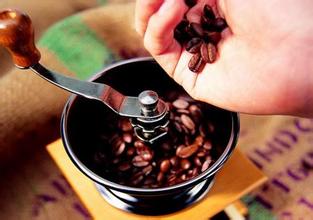
Boutique Coffee beans: history and details of Coffee beans in Latin America
The cultivation and production of coffee in the 17th century has always been monopolized by Arabs and is of great value in Europe. Only the upper echelons of Europe can drink coffee. Until 1690, a Dutch captain sailed to Yemen, got some coffee seedlings and began to plant successfully in Dutch India (present-day Indonesia). In 1727, the wife of a diplomat in Dutch Guiana gave some coffee seeds to her.

Foreign businessmen hold Yunnan coffee very tight; the quotation is always 15 cents lower than the futures price of coffee in New York.
In the view of Li Gongqin, secretary general of the provincial coffee industry association, in addition to insufficient efforts to open up the local market and over-reliance on foreign markets, Yunnan coffee also has some problems, such as few backbone enterprises, low quality, low industrial level, weak competitiveness and so on. Not only the scientific and technological content of the products is low, the added value is not high, and the product convergence is obvious, but also the coffee producing areas do things their own way, there is no overall thinking in this regard, save coffee.

Introduction to the planting environment of Costa Rican coffee flavor manor with mellow taste
Gome established diplomatic relations in 1851. The two countries have close relations and frequent exchanges of high-level visits. The United States is Colombia's largest trading partner. In 2007, Colombia exported 1.142 billion US dollars to the United States and imported 2.865 billion US dollars from the United States. The United States has always regarded Colombia as a model for democracy in Latin American countries and provided a lot of economic assistance. The two sides have maintained close cooperation in anti-terrorism, drug control, military and other fields. The United States has built a Latin American police academy and an American warship in Colombia.

Vietnam is the largest coffee supplier in China.
Wang Lei, deputy secretary general of the China-ASEAN Expo, said at the 9th China-ASEAN Expo held in Nanning, Guangxi on Saturday that Vietnam has become the largest overseas supplier of imported coffee from China, ChinaDaily reported. He said that China's imports mainly come from Southeast Asian countries, while Vietnam is the country that exports the most coffee to China.

A brief introduction to the planting Market Price of Fine Coffee Bean varieties in Nicaragua Los Congo Manor
Coffee is Nicaragua's main export. According to the president of the Nicaraguan Coffee Farmers' Federation, due to the poor harvest of coffee in Nicaragua's Pacific region, the country's total coffee production in 1998 may be 12% lower than that in 1997. In the coffee year of 1997 and 1998, Nicaragua harvested 1.422 million bags of coffee (each bag of 46kg), which is the highest output of coffee in the past 14 years.
Ethiopia sues for Coffee Coffee grows Coffee Bean Price
Ethiopia strongly mediates Brazil, the world's largest coffee producer, to share the research results of natural low-caffeine coffee trees, and then for the rights and interests of coffee farmers to fight against Starbucks, the world's largest coffee chain brand, accusing the green mermaid of embezzling the country's three coffee names, Yegashifi, Sidamo and Harald, and requiring Starbucks to cancel the trademark registration of these three place names.
The export of Pu'er coffee soared by 6061 tons in the first half of the year.
By the end of June, Pu'er City had exported 15036 tons of coffee beans through Pu'er entry-exit Inspection and Quarantine Bureau, earning 63.6255 million US dollars in foreign exchange, a sharp increase of 6061 tons from 8975 tons in the same period last year, and is expected to break through the 20, 000 ton mark by the end of the year. According to reports, Pu'er City currently has a coffee planting area of more than 400,000 mu, with an output of about 35000 tons of coffee beans, planting area and output.
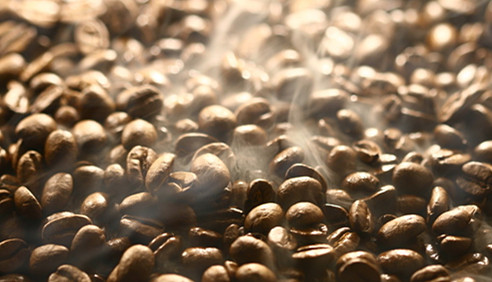
The devaluation of the Brazilian currency is good news for coffee bean bears.
Short investors in coffee beans are likely to benefit from the devaluation of emerging market currencies. As a result of economic stagnation and the collapse of oil prices, the currencies of Brazil and Colombia, the world's largest supplier of Arabica coffee (Arabica coffee), have depreciated, with the Brazilian real down 25 per cent so far this year. In the past six months, the Brazilian real and the Colombian peso have traded against the US dollar.

Boutique coffee Yemeni coffee latest news introduction to the origin of Yemeni coffee
Coffee has been a traditional export product of Yemen for hundreds of years, and it is still one of the most important cash crops and export products of Yemen. Statistics show that among the top 30 exports of Yemen in 2000, cooked coffee beans, raw coffee beans and coffee shells ranked second, eighth and 21st respectively, with a total value of about $17.5 million, of which raw coffee was about $12.25 million.
A brief introduction to the Market Price of High acidity Fine Coffee Bean varieties in Angola
Angolan Agriculture Minister Afonso Pedro Kanga revealed that Angolan coffee production this year is expected to double that of last year to 12000 tons. In 2008, in order to regain its status as a major coffee producer in the world, the Angolan government introduced a plan to receive a preferential micro-loan of US $5000 per farmer to grow coffee. Origin of coffee in Angola: 98% of coffee in Angola (Angola) is Luo